DELTA BERENIKE
Sea operations
The handling and deployment concept for NESTOR towers can be performed by standard vessels or platforms as long as the star arms are limited in length. A 5 m long arm star with diameters of about 12 m can be handled and deployed without any problems. This has successfully been experienced several times. Larger stars with arm length of 15 m (3 arm units) have to be handled folded or suspended and the ‘unfolding’ process at the deployment position can be troublesome.
It was considered therefore to design a dedicated transport- and deployment-platform offering the possibility to handle longer stars and accordingly possible Neutrino detector units with enlarged seawater volume coverage. Together with this consideration the properties of longer star arms were investigated experimentally. For this purpose, the concept of strong mechanical structures for the star, allowing handling of the complete floor in the air, was left for a light weight system to be assembled on the water at the final deployment site, and meant only for determining the locations of the OMs within the tower structure.
|
|
|
|
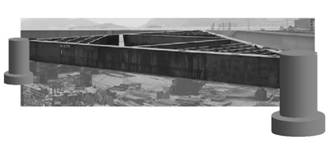
Fig.1a: Design showing the basic structural concept
of DELTA-BERENIKE |
Fig. 1b:
Graphical presentation of the prototype idea of the deployment platform
DELTA-BERENIKE |

For the construction of km3 neutrino telescope, specially constructed and dedicated vessel are preferred to minimize rocking, pitching and rolling motion during operations in the open sea.
|
|
|
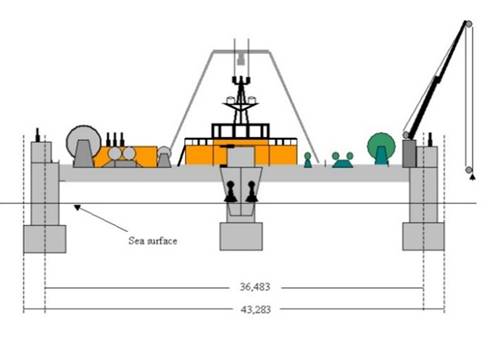
Fig. 2: Schematic, front (bow) view of the
DELTA-BERENIKE (lengths in metres) |
Actually, even in calm seas it is impossible to avoid the long wavelength – low frequencies waves which can be caused by storms hundreds of miles away or by nearby passing ships. This rocking, pitching and rolling motion may lead to catastrophic situations by exciting oscillations on the scientific payload in the sea underneath it. Moreover, in order to position the complex instrumentation package on exact position on the sea floor, precise navigation to the planed position is required and the ability to remain "stationary" for long hours at the deployment site, possibly with variable sea conditions.
|
|
|
Fig.3: Schematic, side (port) view of the DELTA-BERENIKE (lengths in
metres) |

The NESTOR Institute has constructed a special purpose deployment platform named DELTA – BERENIKE (design concept figure 1a and 1b). The design of the DELTA – BERENIKE has been inspired by the off shore oil rigs of the North Atlantic. DELTA-BERENIKE is a Central Well Ballasted Platform of isosceles triangular structure with 51m long sides and 48m long base.
At each apex of the structure, two concentric cylinders (4 and 6m diameter each) are located, providing the required buoyancy and housing the three (one in each apex) motive engine systems; a CATERPILLAR 322 BHP motor coupled to a SCHOTTEL 360° SPJ57RD jet, which can rotate a full 360°.
Using the combinational power and thrust direction of those machines, DELTA-BERENIKE can sail to the required course, dock or hold position on the open sea. The opening in the middle of the triangular structure assures balanced access to the sea surface.
The platform will be equipped with assorted bridge crane, cranes, winches, etc to be used as required (Design concept see Figures 2. and 3.).
DELTA-BERENIKE will be equipped with a Dynamic Positioning system that permits precise navigation and station holding in the open sea. This will extremely useful during deployment of NESTOR - or KM3NeT - instrumentation to exact positions on the seafloor. Detail description can be found in: " DELTA-BERENIKE; A semi-submersible type central‐well, ballasted, self propelled platform"
Detector calibration
The surface
vessel DELTA-BERENIKE, could be used as a
platform for an air shower array; to be used for the absolute angular
calibration of the deep km3 neutrino telescope. A vital requirement of a viable
marine neutrino telescope is the ability to resolve point sources of neutrinos.
The telescope functions by reconstructing neutrino-induced muons. In order to
understand the resolving power of the instrument, an absolute angular
calibration in muons is required. Muons produced by cosmic rays in the
atmosphere offer an abundant calibration source. By covering the DELTA-BERENIKE
surface with 200 blocks of 5m2 plastic scintillator
modules, a surface air shower array can be set up. Running this array in
coincidence with a deep-sea neutrino detector, where the absolute clock-timing
stamp for each event defines the coincidence, would allow performing the
required absolute angular calibration. The reconstruction of the muon tracks
needs only to be performed for the km3 data. The location of DELTA-BERENIKE
will be well known using its GPS system.
Thus, DELTA-BERENIKE will be also valuable on measuring, with sub degree accuracy, the absolute angular resolution of the deployed neutrino telescope keeping position above the deployed neutrino telescope.